Key Takeaways: Dandruff vs Psoriasis Comparison
- Flake Type Matters: Dandruff causes fine, loose white or yellow flakes, while scalp psoriasis forms thick, silvery scales attached to red patches.
- Redness Is a Clue: Mild redness suggests dandruff. Clearly defined red plaques under heavy scaling point toward psoriasis.
- Location Helps Diagnosis: Dandruff stays on the scalp. Psoriasis may extend beyond the hairline to the forehead, neck, or behind the ears.
- Texture Difference: Psoriasis creates raised, thickened skin plaques. Dandruff does not change skin thickness.
- Response to Shampoo: Dandruff usually improves with medicated shampoos. Psoriasis often requires prescription treatment.
- Itching Intensity: Both conditions can itch, but psoriasis may cause burning, soreness, or bleeding if scratched.
- Underlying Cause: Dandruff is linked to oil production and yeast overgrowth. Psoriasis is an autoimmune condition.
- Treatment Approach Differs: Dandruff is managed with antifungal shampoos and mild anti-inflammatory lotions. Psoriasis may require topical steroids, vitamin D analogues, or systemic therapy in severe cases.
- Overlap Is Possible: Some patients develop sebopsoriasis, where features of both conditions appear together.
- When to Seek Medical Advice: Persistent thick scaling, spread beyond the scalp, or lack of improvement with OTC products warrants dermatology consultation.
It’s common to mistake scalp psoriasis for dandruff. Both can cause flakes, itching, and discomfort. Many patients try anti-dandruff shampoos for months before realizing the problem is something else.
Understanding the difference between dandruff vs psoriasis matters. The treatments are not the same. What works for dandruff may do little for psoriasis — and delaying the right treatment can make symptoms worse.
This guide explains how to tell them apart, when to seek medical help, and what treatment options are available.
What Is Dandruff?
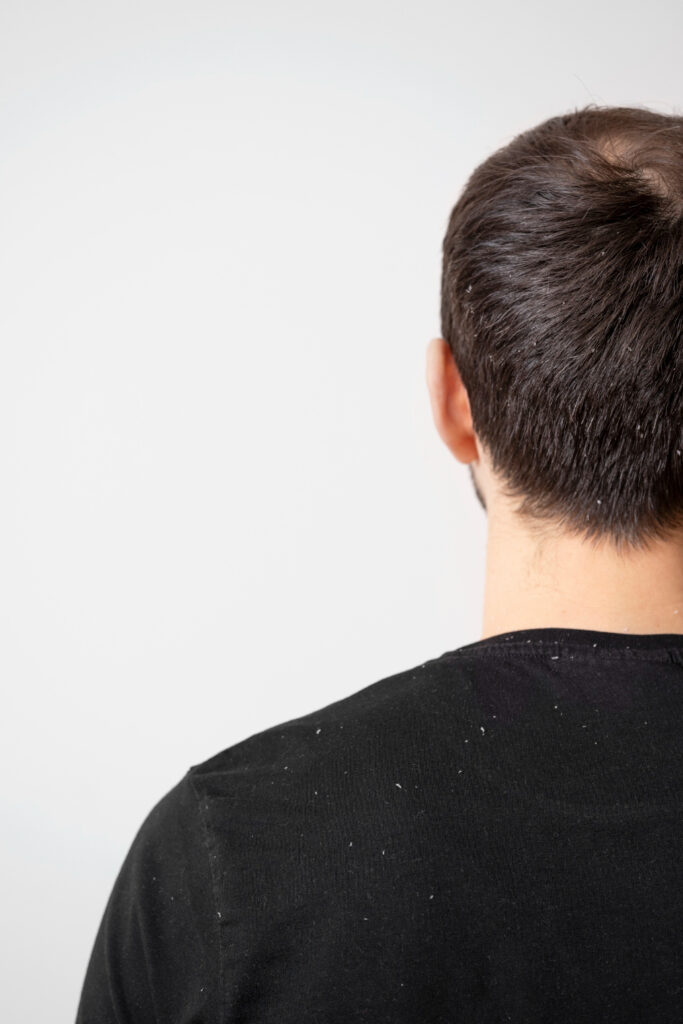
Dandruff is a common scalp condition that causes small white or yellow flakes. It is often linked to excess oil production and sensitivity to a yeast called Malassezia.
In medical terms, persistent dandruff is usually a mild form of seborrheic dermatitis.
Typical signs of dandruff:
- Small white or yellow flakes
- Mild to moderate itching
- Oily scalp
- Redness is usually mild
- Flakes fall easily onto shoulders
Dandruff is not contagious. It tends to worsen in winter, during stress, or when hair washing is irregular.
What Is Scalp Psoriasis?
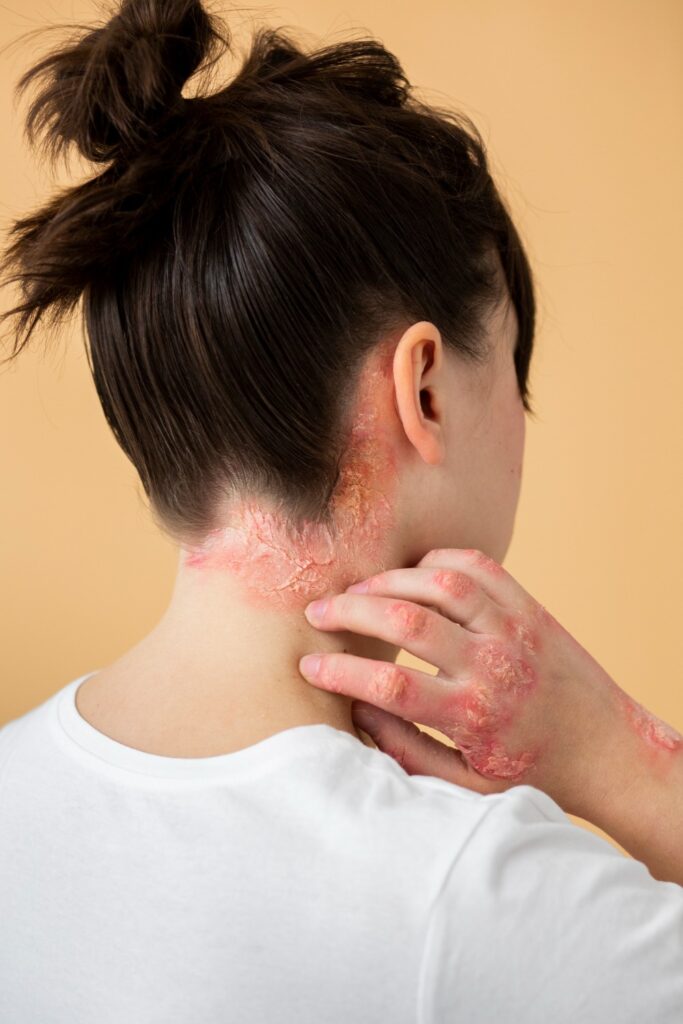
Scalp psoriasis is an autoimmune skin condition. It happens when skin cells multiply too quickly, leading to thickened patches covered with silvery scales.
It can appear only on the scalp or along with psoriasis on elbows, knees, or other body parts.
Typical signs of scalp psoriasis:
- Thick, silvery-white scales
- Well-defined red patches
- Intense itching or burning
- Scales that feel dry and heavy
- Possible extension beyond the hairline (forehead, neck, behind ears)
- Sometimes bleeding when scratched
Unlike dandruff, psoriasis tends to form thicker plaques and may not improve with regular anti-dandruff shampoos.
Dandruff vs Psoriasis: Key Differences
Here’s a simple comparison to help you identify the condition:
1. Flake Appearance
- Dandruff: Fine, loose, and powdery flakes
- Psoriasis: Thick, silvery, and layered scales
2. Redness
- Dandruff: Mild redness
- Psoriasis: Clearly defined red patches under the scales
3. Spread
- Dandruff: Limited to the scalp
- Psoriasis: May spread beyond hairline
4. Thickness of Skin
- Dandruff: No thick plaques
- Psoriasis: Noticeable raised patches
5. Response to Shampoo
- Dandruff: Often improves with medicated shampoos
- Psoriasis: Usually needs prescription treatment
If you’ve been using anti-dandruff shampoo for weeks without improvement, psoriasis becomes more likely.
Can You Have Both?
Yes. Some patients have seborrheic dermatitis and psoriasis together. This overlap condition is sometimes called sebopsoriasis.
In such cases, flakes may look greasy like dandruff but sit on red, thicker skin similar to psoriasis. Proper diagnosis is important before starting treatment.
When Should You See a Dermatologist?
Consider a consultation if:
- The itching is severe
- The scalp feels thick or crusted
- Flakes extend beyond the hairline
- You notice similar patches on elbows or knees
- Over-the-counter shampoos are not helping
- There is hair shedding due to inflammation
Early treatment prevents worsening and reduces discomfort.
How Is Dandruff Treated?
Treatment depends on severity. Options include:
- Medicated shampoos containing ketoconazole, selenium sulfide, or zinc pyrithione
- Short courses of anti-inflammatory lotions
- Lifestyle adjustments (regular washing, stress control)
Most cases respond well within a few weeks.
How Is Scalp Psoriasis Treated?
Psoriasis requires a different approach because it involves immune overactivity.
Treatment may include:
- Prescription topical steroids
- Vitamin D analogues
- Coal tar preparations
- Salicylic acid to reduce scaling
- Systemic medication in severe cases
- PRP therapy in selected patients
At Dr Kshitij Saxena’s Skin Clinic, patients with scalp psoriasis are evaluated individually. Conservative medical management is often the first line of treatment. For selected cases, PRP (Platelet-Rich Plasma) therapy may be considered to improve scalp health and reduce inflammation.
The clinic offers consultations at:
- Lucknow – K-38, Quila Rd, near Power House Chauraha, Sector K, Ashiyana, Uttar Pradesh 226012
- Farrukhabad
- Shahjahanpur
Consultation fee: ₹500
Virtual consultations are also available for patients across India.
Why Self-Diagnosis Often Fails
Many people assume flakes automatically mean dandruff. But psoriasis can look similar in early stages.
Using the wrong treatment may:
- Delay relief
- Increase irritation
- Cause unnecessary hair fall due to scratching
A dermatologist examines:
- Scale thickness
- Distribution pattern
- Skin texture
- Associated body lesions
- Family history
The diagnosis is usually clinical and does not require biopsy in most cases.
Common Myths About Dandruff vs Psoriasis
Myth 1: Both are caused by poor hygiene
Not true. Psoriasis is immune-related. Dandruff is linked to scalp biology, not cleanliness.
Myth 2: Psoriasis is contagious
It is not infectious.
Myth 3: Oil application cures both conditions
Heavy oiling may worsen seborrheic dermatitis and irritate psoriasis.
Myth 4: Hair loss is permanent
In most cases, hair regrows once inflammation is controlled.
Living With a Chronic Scalp Condition
If you have psoriasis, it may follow a relapsing pattern. Flare-ups can be triggered by:
- Stress
- Infections
- Cold weather
- Sudden withdrawal of medication
Consistent follow-up helps maintain remission.
For dandruff, maintenance shampoo use once or twice weekly often keeps symptoms controlled.
How to Care for Your Scalp at Home
Regardless of the diagnosis:
- Avoid harsh scratching
- Use lukewarm water
- Choose mild shampoos unless prescribed otherwise
- Limit excessive heat styling
- Manage stress
- Follow the full course of treatment
Stopping treatment early is a common reason for recurrence.
Final Thoughts: Dandruff vs Psoriasis
At first glance, dandruff and scalp psoriasis may seem similar. The differences lie in scale thickness, redness, spread, and response to treatment.
If flakes are persistent, thick, or spreading beyond the scalp, it is worth getting evaluated. Early diagnosis makes treatment simpler and prevents unnecessary discomfort.
If you are unsure whether it is dandruff or psoriasis, a professional examination can provide clarity.
Dr Kshitij Saxena offers in-clinic consultations in Lucknow, Farrukhabad, and Shahjahanpur, along with virtual appointments for patients across India. A timely consultation can help you start the right treatment and avoid prolonged irritation.
Booking an appointment is a small step that can make a noticeable difference in scalp health.